What would you like to see more of?

Friday, February 24, 2017

F.A.Q.

You can sign up to our mailing list to be notified of gallery shows or events by emailing us at:


To purchase a piece, or inquire about purchasing a piece, please email us and let us know. We will discuss your framing preferences, and quote a price after factoring the shipping and crating costs. 

Many of our pieces can be custom framed to your specification. We are happy to work with you if you'd like to choose how we frame your piece to compliment the artwork. 

About our Studio

We are located in Oklahoma City, and work out of our home. We employ many different media and methods in our work, firmly believing that frequency and experimentation will never cease to spark creativity.

Science and experimentation play a large part in our art, as well as mixing industrial media with classical forms, and contrasting created and natural effects within a piece. We are always learning and discovering new methods and new techniques, and thus, our art is in a constant state of evolution. Some things work, some things don't, and some are just interesting.

The idea of exploring art as an interactive text has always appealed to me; when creating art, the idea of articulating a complex textual message feeds the artistic process.

I hope that you feel some of this as you read through this blog. I hope you enjoy it.


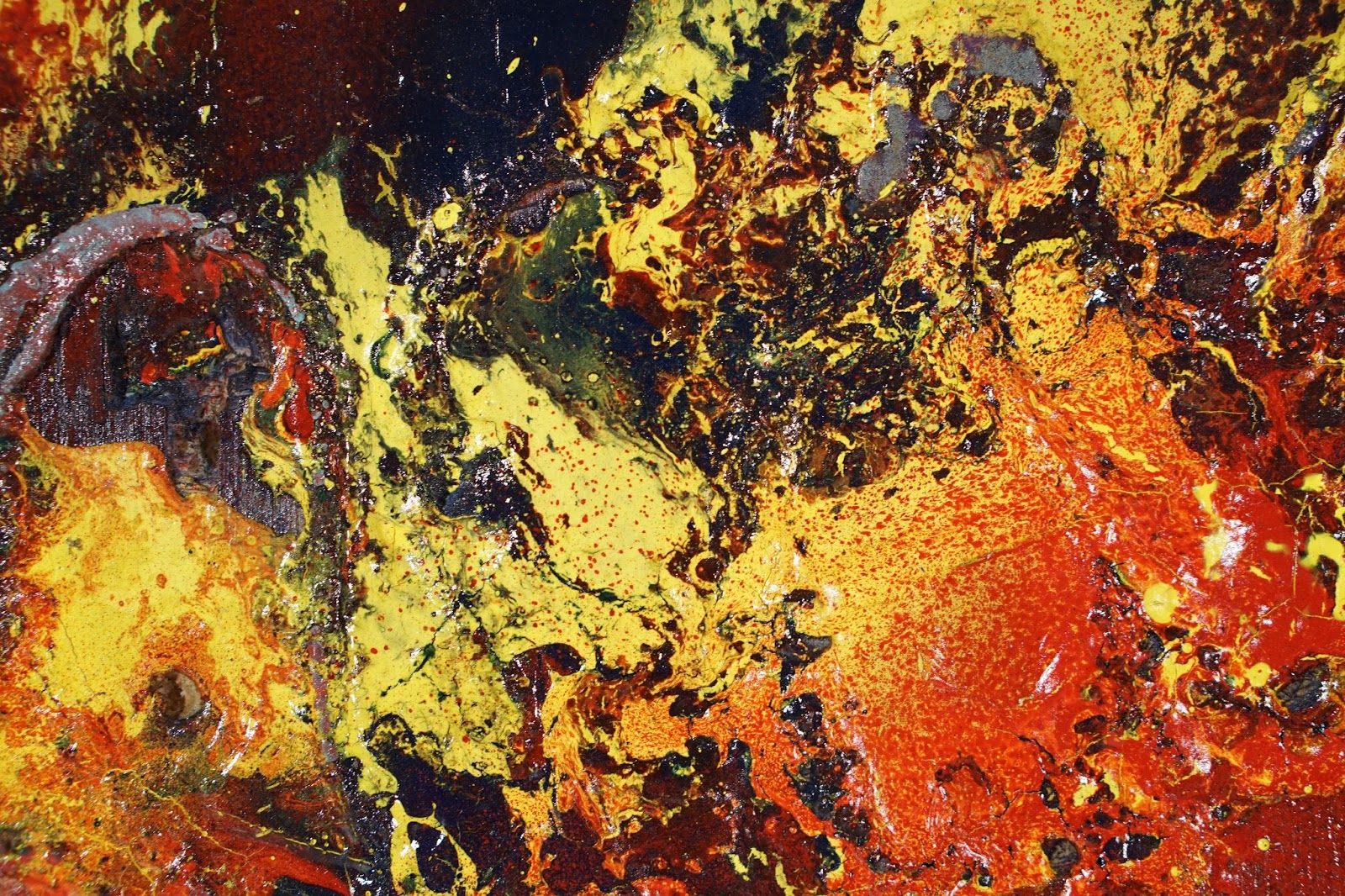
PORTFOLIO EDITION: Molten


PORTFOLIO EDITION: Rooted Reflection


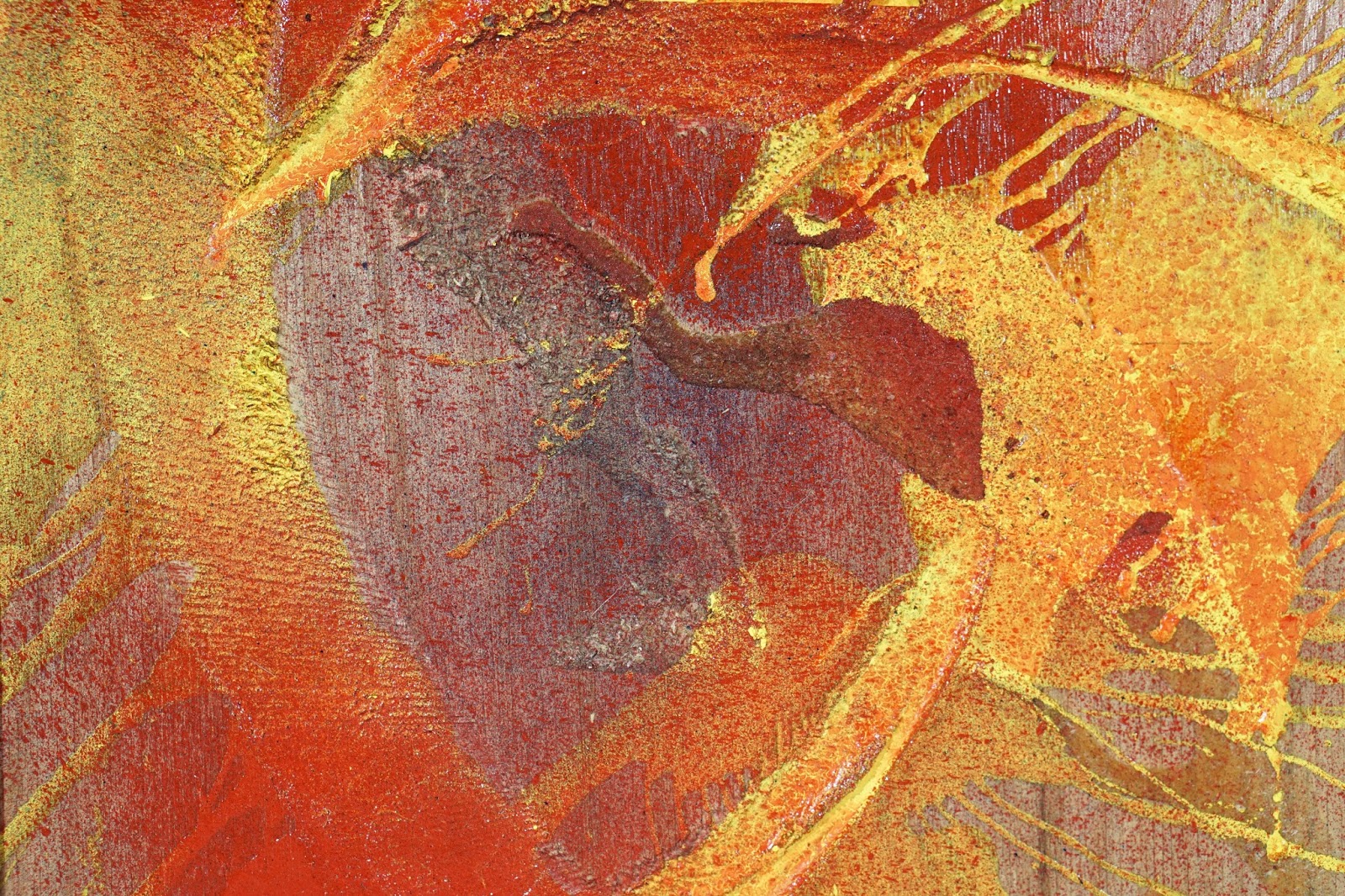
PORTFOLIO EDITION :The Firebird


Tempera on ply. Custom walnut frame. Collaborative piece for John Rouse and Jessica Tate. Carved on radial arm saw.


In this piece; Jessica took a page out of my play book and flung the piece like a frisbee :)  Her first time doing this joyous endeavor.  I've always loved the way primary colors blend together into secondaries and tertiaries when flung haphazardly!  Also... I really like the sound of the word "flung..." Flung; so tasty.   I'm gonna say it one more time; "Flung!"  yeaaaah.


Lichtenberg Process with "Roots of the Mountain"


Lichtenberg figures are fractal, branching, tree-like patterns that are created by the passage of high voltage electrical discharges along the surface, or through, electrically insulating materials, discovered by German physicist Georg Christoph Lichtenberg. Depending on the material the voltage passes through, it can be burned in different ways.

This is of great interest to John, who modified a microwave transformer for the purpose of creating the figures. First, the canvas is painted with a solution of baking soda and water to render it conducive. By putting more or less of the solution on different parts of the canvas, you can create higher and lower areas of conductivity, resulting in different burn patterns. You can also control the burn by moving the metal conductors (alligator clips in this case, hooked to pieces of iron) around on the canvas.


Here, you see the process in action. Note the spreading fractal patterns, as well as the tub of baking soda solution. DO NOT TRY THIS AT HOME unless you are pretty confident no one will miss you. We are working on perfecting safety methods with this. 


After burning.


The piece is then washed and the char is scrubbed out of the channels with a wire brush. 


The figures begin to take shape. The general idea of the canvas begins to emerge, and shapes begin to suggest themselves. The depth and dimension begin to show. 


At this point, I spent quite a bit of time in meditation on this piece, trying to see it for what it needed to be. The shapes provide a suggestion of the ultimate image, and by looking closely, you can see what needs to be rendered.


I am inspired by Asian art, and by traditional Chinese landscape painting. The simplicity and movement feel very powerful to me, and the limited palette is actually quite challenging to work within, and still create depth and nuance. I like to work with traditional Chinese calligraphy ink, and bamboo/horsehair brushes.


Most of this was done with either a 4 or an 0/4. Most of the lining work is with an 0/4, and tinting and shading with the 4. There is a lot of watercolor style ink shading here to create the multiple tones; the grain of the wood influences the color as well. I imagine there are about 20 hours of work in this piece.


I'll be honest, I love it. I created a story in this, with the elements of a traditional Chinese landscape; the footbridge, winding paths, outcroppings, etc. 


I love the process of creation in this piece. We enjoy working this way, and the Lictenberg method is a constant challenge and surprise. It adds an unexpected element to art that is often lost to rote or predictability. We enjoy finding out what it will be. 


Thank you to Jason Welch @ Jason Welch Photography for capturing the depth and dimension of this piece. 

Roots of the mountain is for sale. For inquiry, please contact Dada.Collective.Gallery@gmail.com.

Mondrian Redux Explained


 This piece is insane.

As in, maybe actually crazy.

It began simply, as a canvas that John had created abstract shapes on through carving and sanding with industrial tools and adhesives, later adding stain and color, as well as giving it dimension with the silica, and texture with sawdust.

It sat on the table in the studio for weeks, because neither of us knew what to do with it.

Until I snatched it, and decided that the only proper thing to do was to contrast the chaos with the most orderly thing I could think of; De Stijl.


I love the architectural minimalist modernism of Piet Mondrian, and thought that would be a nice counterpoint to what was happening here.


But the key for me was to leave the chaos undisturbed and to integrate the lines and hard shapes within the constraints that existed. 


This was created with a rigorous observation the curves and undulations, supraimposing the geometry underneath the nonlinear constructs.


Then, I started thinking about Frank Lloyd Wright, and the Coonley windows, and thought that the primary colored shapes would finish it off nicely.

The contrast and texture in this piece makes it one of our favorites. The idea that order and chaos can exist in a harmonious binary without intruding on the psychic space of the other makes for an interesting visual concept, and certainly remains entertaining.

Thank you to Jason Welch @ Jason Welch Photography for capturing the movement and texture in this piece.
Mondrian Redux is for sale; please email Dada.Collective.Gallery@gmail.com